Brow Lift
Green Bay and Appleton, WI


If the outer part of your brow has started to sit lower, you may notice less space above your eyes or more skin resting over your upper lids. A brow lift raises the tissues above the eyes to ease that heaviness. The first thing we look at is where the change is coming from, since a low brow and extra eyelid skin call for different treatments.
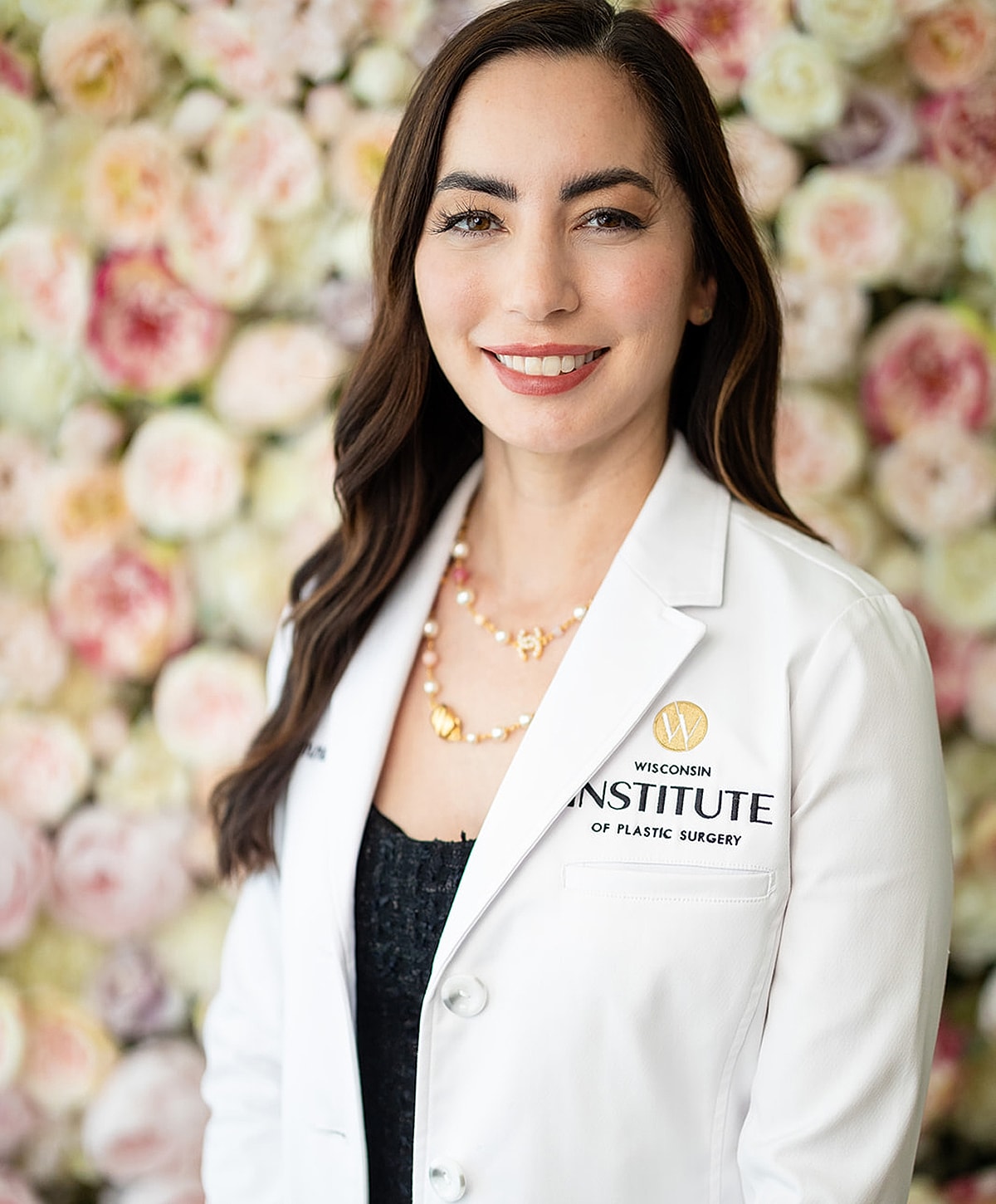
At Wisconsin Institute of Plastic Surgery, Dr. Tina Sauerhammer helps Green Bay and Appleton patients work through those choices. You can tell her what you’ve noticed and what you’d like to keep about your appearance. She’ll examine your brow position, eyelids, and facial proportions, then talk with you about the options, recovery, and cost. You don’t need to arrive knowing which procedure to ask for.


A brow lift, also called a forehead lift, is a surgical procedure that raises low eyebrows by repositioning the forehead and brow tissues. It can reduce hooding caused by a descending brow and soften some forehead creases. The amount and direction of lift depend on your anatomy and goals.
Your brow and upper eyelid are closely connected. When the brow drops, it can push skin down over the lid, even if the eyelid itself hasn’t changed much. We check both areas during your exam. The aim is to find a brow position that suits your face and the amount of change you want.
Raising a low brow can make the upper-eye area look more open and less heavy. Depending on your features and the surgical approach, a brow lift may help with:
A brow lift won’t remove under-eye bags or smooth every forehead wrinkle. If extra eyelid skin is the main concern, blepharoplasty may be a better choice. When both the brow and eyelid have changed, we can explain what treating each area would involve.
A brow lift may be a good fit if your brows sit low, you’re in good health, and the changes you want are achievable with surgery. There isn’t one right age for the procedure. Your skin, hairline, health, and any previous facial surgery all help guide the recommendation.
We’ll go over your medical history and do a physical exam at your consultation. Tell Dr. Sauerhammer about dry eyes, trouble closing your eyes, previous eyelid surgery, and any injectable treatments you’ve had. These details help her understand how your brows and eyelids work together and what needs extra care during planning.
An uncontrolled medical condition or nicotine use may mean waiting before surgery. We’ll explain any steps you need to take first. If your main concern is expression lines and your brows haven’t dropped much, a nonsurgical treatment may give you the smaller change you’re looking for, with less recovery time.
Schedule a consultation to talk through the changes around your eyes and find out which options make sense for you.

The right treatment depends on what’s causing the heaviness. Here’s how the three options differ:
Option | Main purpose | Important distinction |
|---|---|---|
| Brow lift | Raise a low brow and reduce related upper-eye hooding | Repositions brow tissues through surgery |
| Upper eyelid surgery | Remove excess skin from the upper eyelids | Does not directly reposition a low eyebrow |
| Botox | Soften expression lines; provide a small temporary brow lift in selected patients | Cannot remove excess skin or reproduce surgical tissue repositioning |
Botox may suit you if you want a smaller, temporary change. If both your brows and eyelids need attention, a brow lift and eyelid surgery can sometimes be done together. We’ll discuss the benefits, surgical time, and recovery before recommending a combined plan.

A brow lift raises and supports the soft tissue above your eyes. The approach determines where the incisions go and which type of anesthesia is used. Before surgery, your surgeon will explain the planned lift, the incision locations, and any effect on your hairline.
An endoscopic brow lift uses small incisions behind the hairline and a camera to guide tissue adjustments. A temporal brow lift focuses on the outer brows through incisions near the temples. A coronal brow lift uses a longer incision within the scalp, while a hairline approach places it at the front hairline. Your forehead skin, hairline height, and the area that needs correction help determine the approach. Dr. Sauerhammer will explain the approach she recommends for you.
The main steps are:
We’ll review the expected procedure length and how much time to allow at the surgical facility. Having other procedures at the same time can change those arrangements and the recovery you’ll need to plan for.
Expect some swelling, bruising, tenderness, and a tight feeling across your forehead in the first days after surgery. Your scalp or the areas around the incisions may feel numb or itchy, too. We’ll explain how to care for the incisions, take your medication, and ease back into your usual routine.
Rest with your head raised as directed, and take gentle walks once you’re cleared to do so. Avoid bending, heavy lifting, and straining. Follow your surgeon’s instructions about wound care and compresses, and check with us before putting any new product on the healing area.
Initial wound healing takes about 10–14 days for many patients. You may feel ready to return to desk work around then, though bruising and swelling can still be visible. Give yourself more time before a big event, and discuss a separate return-to-work plan if your job involves lifting or physical effort. Recovery continues after those first two weeks, even when you feel comfortable being out and about.
Wait for clearance before restarting strenuous exercise or heavy lifting. We’ll also let you know when you can wash and style your hair and use makeup near the incisions. Swelling and changes in sensation may take longer to settle than the surface wounds.
Call our surgical team right away for increasing pain, sudden swelling, a fever, or concerns about an incision. Sudden changes in your vision need urgent medical attention. Seek emergency care for chest pain or trouble breathing.
Brow lift risks include bleeding, infection, poor wound healing, visible scars, and reactions to anesthesia. Procedure-specific risks include hair loss near incisions, a changed hairline, uneven brow position, persistent numbness, eye irritation, and nerve injury that can affect movement. Additional surgery may be needed to address a complication or an unsatisfactory result.
We’ll discuss the risks of a brow lift as they apply to your health and the proposed technique. Ask about anything that concerns you, including scarring, changes in sensation, or the possibility of needing another procedure. You should understand those trade-offs before deciding on surgery.
You may notice the lift soon after surgery, but swelling can make the brows look uneven or hide their shape at first. The contour becomes easier to see over the next few weeks. It will continue to settle over several months as the tissues heal and the incision lines soften.
Brow lift results can last for years, though your skin will keep aging and the brows may lower again over time. Genetics, skin quality, sun exposure, and the surgical technique all play a part. Protecting your skin from the sun and avoiding smoking support skin health. We can discuss what lasting improvement is realistic for you.
Every surgical incision leaves a scar. Placing it in or along the hairline can help conceal it, but your hair thickness, hairstyle, and healing all affect how visible it will be. If you have thinning hair or a receding hairline, bring that up during your consultation so we can discuss incision placement with that in mind. We’ll explain scar care as you heal.
Your brow lift cost depends on the approach, how much correction you need, anesthesia, facility fees, and any other procedures included in the plan. A focused outer-brow lift and a more extensive forehead lift involve different amounts of surgical work and operating time.
At Wisconsin Institute of Plastic Surgery, you’ll receive personalized pricing and procedure information during your consultation. Our pricing information is a useful starting point. Ask what your quote includes, from follow-up appointments to tests and prescriptions. Cosmetic brow lifts are generally self-pay. If your brow position affects your vision, ask about an evaluation and your insurer’s documentation requirements. Vision symptoms alone don’t guarantee coverage.
Dr. Tina Sauerhammer is a plastic surgeon certified by the American Board of Plastic Surgery and the American Board of Surgery, with fellowship training in craniofacial and pediatric plastic surgery. Her background in facial anatomy supports careful evaluation of the relationship between your brows, eyes, and surrounding features.
We want the plan to fit your features and the change you have in mind. That starts with listening and taking time to explain what surgery can and can’t do. Our practice has a private, AAAHC-accredited surgical suite in Appleton, with dedicated rooms for care before and after surgery. We’ll review the setting and arrangements for your procedure as part of your plan.
Considering a brow lift? Unsure about the amount of change you want or how to plan time off? Bring those questions to your consultation. Dr. Sauerhammer can help you understand what’s causing the heaviness, what treatment could offer, and what recovery would involve for you.

Bring this concern up during your consultation. The height and shape of the brow, your upper eyelids, and any existing asymmetry all matter when planning the lift. Photographs can help you explain what looks natural to you and what you want to avoid. Dr. Sauerhammer will discuss what’s achievable for your features.
Yes, if a low brow is contributing to the hooding. If the main issue is extra eyelid skin, blepharoplasty may be more useful. A drooping eyelid margin may need a different evaluation. We’ll examine the area to understand which structures are involved before recommending treatment.
Yes. A brow lift can preserve a lower, straighter brow shape if that suits your face and the look you want. Your hairline and any thinning hair also help guide incision placement.
The terms generally refer to the same family of procedures. A temporal lift focuses on the outer eyebrows, while other approaches treat a broader part of the forehead. Ask your surgeon to explain what the recommended technique will change and where the incisions will sit.
A facelift treats the mid and lower face, while a brow lift addresses the upper face. Combining them may make sense if you have concerns in both areas. We’ll talk through your health, total surgical time, and the recovery involved before recommending that approach.
At the Wisconsin Institute of Plastic Surgery, you can enjoy a range of cosmetic procedures and dedicated care in our offices in Appleton and Green Bay. As a double-board certified plastic surgeon, Dr. Sauerhammer specializes in rejuvenating surgical solutions, including breast augmentation, tummy tuck, and facelifts, designed to help you look and feel your best. We seamlessly integrate all our plastic surgery services with skilled dermatology care and aesthetic specialists: Megan MacCarthy, PA-C, Colleen Van Egeren, PA-C, and Amanda Olsen, PA-C. They prioritize your goals through comprehensive evaluations and advanced techniques to help you achieve optimal and long-lasting results.