Fat Transfer Breast Augmentation
Appleton & Green Bay, WI

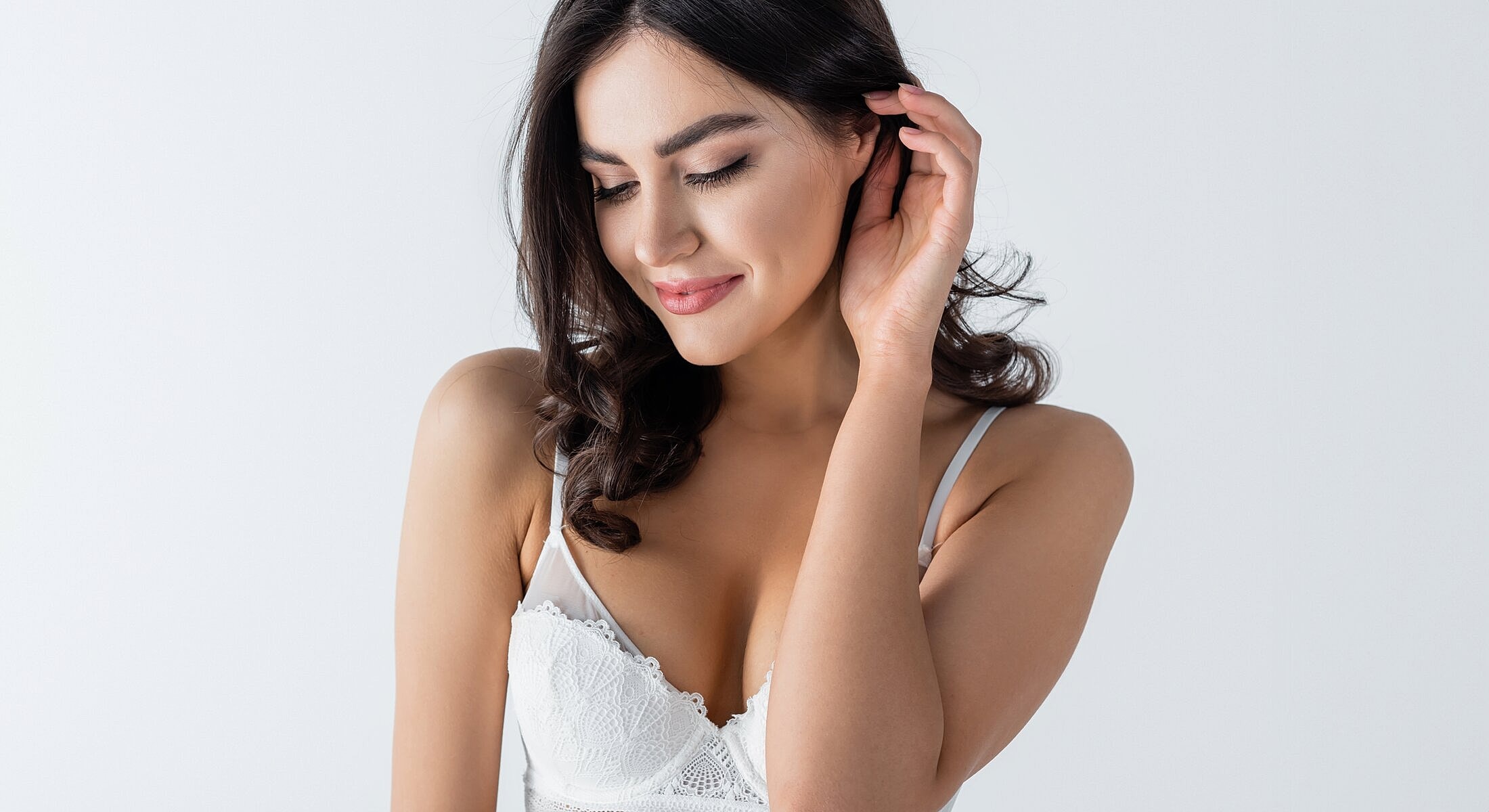
For women who have always wanted an increase in breast size but aren't sure about getting implants, fat transfer breast augmentation offers another option using your own body fat to add natural-looking volume. At Wisconsin Institute of Plastic Surgery, Dr. Tina Sauerhammer customizes the procedure based on your breast shape, how much donor fat you have, and the results you want. The aim is to create balanced, natural results that suit your body.


Fat transfer breast augmentation, also called breast fat grafting or autologous fat grafting, uses your own fat instead of a breast implant to increase breast volume. Dr. Sauerhammer removes unwanted fat from another part of your body with liposuction, prepares the fat cells, and carefully injects them into the breasts.
Since the added volume comes from living tissue, fat transfer works differently than breast implants. Saline and silicone implants provide a set amount of volume. With fat transfer, some fat cells establish a blood supply and remain long-term, while others are absorbed as you heal. This makes it especially appealing if you want natural breast augmentation with a more modest increase in size.
Fat transfer combines liposuction and breast augmentation in one surgical plan.
Dr. Sauerhammer removes excess fat from one or more donor areas, which may include the abdomen, flanks, back, hips, or thighs. She also pays attention to the shape of these areas so they remain smooth and proportional after fat removal.
The harvested fat is specially prepared so healthy fat cells can be used for transfer.
The prepared fat is carefully injected into different areas of the breasts in small amounts. Placement depends on what you want to improve, whether that is upper breast fullness, lost volume, breast shape, or mild asymmetry.
Fat transfer works best when the goal is refinement rather than a major change in breast size. It may help:
This dual benefit is part of the appeal. Fat is removed from an area where you don’t want it and used to naturally enhance the breasts.
Fat transfer is generally best for a modest increase in breast size. It doesn’t usually create the same amount of projection or upper breast fullness that an implant can. How much volume can be added depends on your existing breasts, skin quality, available body fat, and how much transferred fat survives. There’s no guaranteed cup-size increase that applies to everyone. If you want a larger or more predictable change, breast implants may be a better option. If you prefer subtle enhancement using your own tissue, fat transfer may fit your goals very well.

You don’t need to decide between fat transfer and implants before your consultation. Part of the process is understanding what each option can realistically do for you.
Fat transfer may be a good fit if you want a smaller increase, have enough donor fat, and prefer not to use an implant. Breast implants offer greater control over breast size and projection and may make more sense if you want a larger change. Wisconsin Institute of Plastic Surgery offers both saline implants and silicone implants filled with cohesive silicone gel.
Fat transfer avoids implant-specific concerns such as rupture and capsular contracture, but it has potential risks of its own. Dr. Sauerhammer can help you compare both approaches based on your anatomy and goals rather than expecting you to choose before you come in.
Common donor areas include the abdomen, flanks, back, hips, and thighs. Dr. Sauerhammer looks for areas with enough excess fat to harvest safely while still leaving a smooth contour after liposuction.
You don't need a particular body type to ask about fat transfer, but very lean women may not have enough donor fat to create the volume they want. Your consultation looks at both sides of the procedure: how much fat can safely be removed and how much can realistically be added to the breasts.

You may be a good candidate if you are in good overall health, have fully developed breasts, are at a stable weight, and want a modest increase in volume. You also need enough usable fat for harvesting and realistic expectations about how much of the transferred fat will remain.
Skin quality and breast shape also matter. Fat grafting adds volume, but it cannot correct every concern. If you are not sure whether you need breast augmentation, a breast lift, or both, Dr. Sauerhammer can examine your breasts and explain which approach is most likely to help. You can then decide what feels right for you.

Fat transfer can fill out a breast that has lost volume, but it doesn’t remove excess skin or reliably lift a breast with significant sagging.
This often comes up after pregnancy, breastfeeding, or major weight loss because loss of volume and drooping can happen together. Fat can restore fullness, while breast lift surgery addresses stretched skin and breast position. Depending on your anatomy, Dr. Sauerhammer may recommend a breast lift alone or combine a lift with added volume.
Fat transfer breast augmentation is an outpatient surgical procedure performed under general anesthesia. Dr. Sauerhammer begins with liposuction of the selected donor areas. Tumescent fluid containing a local anesthetic and medication that constricts blood vessels may be used as part of the liposuction process.
The harvested fat is then prepared and carefully injected into the breasts in small amounts. Although the incisions used for liposuction and fat transfer are very small, careful planning is important because both the breasts and donor areas need to heal smoothly.
Recovery affects both your breasts and the areas treated with liposuction. Your breasts may feel swollen, bruised, or tender at first, while the donor areas often feel sore, swollen, and tight. A compression garment may be used to help reduce swelling and support the liposuction areas.
Many patients plan about a week away from work, although this depends on how much liposuction was performed and what your job involves. Light activity returns first. At Wisconsin Institute of Plastic Surgery, strenuous activity after liposuction is generally avoided for at least three to four weeks. Swelling improves over several weeks, while your final shape continues to settle over the following months.
Some transferred fat survives, and some does not. That is a normal part of fat grafting. Each fat cell needs to establish a new blood supply after it is placed into the breast. Cells that do so can remain as long-term breast volume, while cells that do not survive are gradually reabsorbed by the body.
This is why your breasts look fuller immediately after surgery than they will once the final results settle. Dr. Sauerhammer takes expected fat retention into account when planning the procedure, but no surgeon can guarantee exactly how much transferred fat an individual patient will retain.

The fat cells that survive the healing process can provide long-lasting volume and behave like fat elsewhere in your body. Significant weight loss can cause those cells to shrink, while weight gain may make them larger. Pregnancy and aging can also continue to change your breasts over time. Maintaining a healthy lifestyle and stable weight helps preserve both your breast volume and the body contours created with liposuction.
Yes. Some patients achieve the volume they want with one surgery, while others choose another fat transfer after their final results have settled.
Another procedure may add more breast volume, improve mild asymmetry, or build on the first result when placing the full desired amount during one surgery was not appropriate. If you are hoping for as much volume as fat transfer can safely provide, Dr. Sauerhammer can discuss whether more than one session may be needed.
Fat transfer avoids some complications associated specifically with implants because no implant is placed, but it still has potential risks. These can include bleeding, infection, asymmetry, contour changes at the donor site, fat necrosis, oil cysts, calcifications, loss of more transferred volume than expected, and the possibility of another procedure.
Fat grafting may also create benign changes that appear on breast imaging. Mammograms can still be performed after fat transfer breast augmentation, but you should let your breast-imaging provider know that you have had fat grafting. Dr. Sauerhammer will review your health history, potential risks, expected results, and other options before surgery so you can make an informed decision.
Fat transfer breast augmentation cost varies because the procedure includes both liposuction and breast enhancement. Pricing can depend on how many areas are treated with liposuction, how much fat needs to be harvested and transferred, anesthesia and facility needs, and whether another procedure such as a breast lift is performed at the same time.
Wisconsin Institute of Plastic Surgery provides personalized pricing after Dr. Sauerhammer evaluates your anatomy and develops a surgical plan. If more than one fat transfer session may be needed, that is also something you can discuss during your consultation before deciding how you would like to proceed.
Fat transfer breast augmentation requires experience with both breast surgery and body contouring. Dr. Sauerhammer needs to create a smooth donor area, determine how much fat can safely be transferred, and place it carefully to create balanced breast volume.
Dr. Tina Sauerhammer is double board-certified by the American Board of Plastic Surgery and the American Board of Surgery. Because her breast augmentation approach includes fat transfer as well as saline and silicone implants, your consultation can begin with the result you want rather than assuming one method is right for everyone. Surgery is performed in Wisconsin Institute of Plastic Surgery's private, AAAHC-certified Appleton surgical center.
Fat transfer is usually best for a modest increase in breast volume. The amount possible depends on your existing breast tissue, skin, available donor fat, and how much transferred fat survives.
Some transferred fat is naturally reabsorbed, while the cells that establish a healthy blood supply can remain long-term. Retention varies between patients, so there is no single percentage that can be guaranteed.
The surviving transferred fat behaves like fat elsewhere in your body. Significant weight loss can make those cells smaller and reduce some of the breast volume gained from surgery.
Possibly. What matters is whether you have enough usable body fat to achieve your desired result while leaving the donor areas smooth. Very lean patients who want more volume may be better candidates for breast implants.
Fat transfer and liposuction use small incisions, so scarring is generally limited. Any surgical incision can leave a permanent scar, but these access points are much smaller than the typical incision used to place an implant.
You can continue to have mammograms after fat transfer breast augmentation. Fat grafting can cause benign calcifications and other imaging changes, so tell your breast-imaging provider that you have had the procedure.
Yes. Fat grafting can add volume selectively and may improve mild differences in breast size or shape. How much correction is possible depends on your anatomy and the amount of fat available.
For some patients, yes. A breast lift addresses sagging and excess skin, while fat transfer can restore or add volume. Dr. Sauerhammer can determine whether a breast lift, fat transfer, or a combination makes the most sense for you.
At the Wisconsin Institute of Plastic Surgery, you can enjoy a range of cosmetic procedures and dedicated care in our offices in Appleton and Green Bay. As a double-board certified plastic surgeon, Dr. Sauerhammer specializes in rejuvenating surgical solutions, including breast augmentation, tummy tuck, and facelifts, designed to help you look and feel your best. We seamlessly integrate all our plastic surgery services with skilled dermatology care and aesthetic specialists: Megan MacCarthy, PA-C, Colleen Van Egeren, PA-C, and Amanda Olsen, PA-C. They prioritize your goals through comprehensive evaluations and advanced techniques to help you achieve optimal and long-lasting results.