Laser Vein Treatment
Green Bay and Appleton, WI

Red or purple veins, especially around the nose and cheeks, can be hard to hide.
The laser vein treatment Green Bay patients choose at our practice is a nonsurgical option that helps reduce these veins for clearer, more even skin. At Wisconsin Institute of Plastic Surgery, we select the technology and settings based on your skin, the type of redness, and your goals. You can schedule a consultation in Green Bay or Appleton, WI.
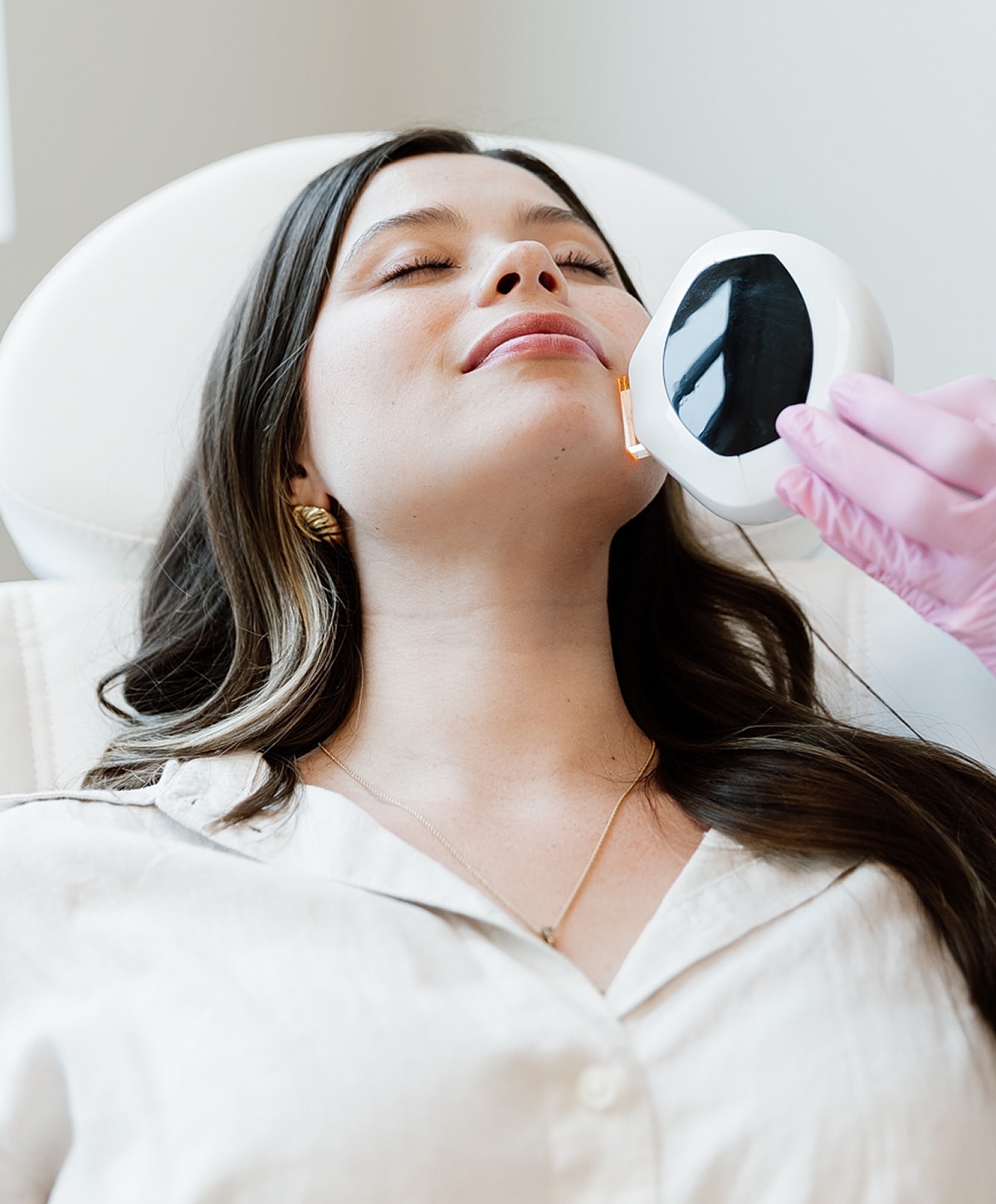

Laser vein treatment uses light energy to target unwanted veins and blood vessels close to the skin’s surface. The energy is absorbed by hemoglobin in the vessel, which heats and closes it while protecting the surrounding skin. Over time, your body removes the treated vessel, and it fades away.
Laser vein treatment includes both laser therapy and intense pulsed light (IPL). Lasers use a single wavelength, while IPL uses a range of wavelengths. The best choice depends on the size, color, depth, and location of the vessel, as well as your skin type.
You don’t have to decide on a device before your first visit. Your provider will look at your visible veins and suggest the treatment that best matches your skin concerns.
IPL Photofacial uses broad-spectrum light to target red and brown pigments. It works well for tiny veins, broken capillaries, or widespread redness over larger areas. IPL can also help with sunspots or uneven skin tone if those issues appear with redness.
Harmony XL Pro is a flexible system with several laser and light-based options. Its technology lets us adjust treatments for different types of veins, skin types, and concerns, instead of using the same setting for everyone.
Facial redness and visible veins can be signs of rosacea. If so, laser treatment may be used along with prescription medicine, gentle skincare, and managing triggers. Our rosacea treatments address the whole condition, not just the redness you see.
Facial spider veins, also called telangiectasias, are small, threadlike blood vessels that commonly appear around the nose, cheeks, and chin. Laser vein treatment may also address broken capillaries, individual facial veins, clusters of tiny visible vessels, and broader vascular redness. When redness is associated with rosacea, light-based treatment may be included as one part of a more comprehensive care plan.

Laser and light-based treatments can be adjusted to the vessels, surrounding skin, and the area being treated. Depending on your treatment plan, benefits may include:

Redness can be caused by single veins, rosacea, sun damage, or a mix of issues. At Wisconsin Institute of Plastic Surgery, our team combines dermatology, plastic surgery, and medical aesthetics in one place, so we look beyond just the visible symptoms. We’ll explain whether IPL, Harmony XL Pro, medical rosacea care, or a referral for another vein condition is the best next step for you.

You may be a good candidate if you are bothered by visible facial veins or redness and have realistic expectations. For our Green Bay laser vein treatment patients, we check for recent tanning, medications, skin sensitivity, infections, pregnancy or breastfeeding, and past reactions to laser treatments. Careful review is important because some skin types have a higher risk of temporary discoloration after light-based treatments.
These treatments are aimed at small vessels near the skin's surface. They don’t cover underlying vein disease or the procedures used to treat larger varicose veins. Bulging veins, persistent leg pain, heaviness, swelling, warmth, or skin wounds should be evaluated by a medical or vascular specialist.
At your consultation, your provider will find out if you have spider veins, widespread redness, rosacea, or another issue. Your medical history, medications, sun exposure, past treatments, and skin tone all help create your treatment plan.
During your laser session, your skin will be cleaned and you’ll get protective eyewear. Cooling gel, cold air, or numbing cream may be used if needed. The device then sends quick pulses to the treatment area. Most people feel warmth, a light snap, or brief stinging. The appointment length depends on how many veins or areas are treated.

Patients in Appleton and Green Bay choose Wisconsin Institute of Plastic Surgery because of the skill, experience, and personal attention that our team provides. Learn what other people in our community have to say about our doctors and their treatment.
Most people can go back to their usual activities soon after treatment. You might have some redness, swelling, warmth, bruising, or darkening in the treated areas, but these usually go away quickly. Sometimes, veins may look more visible before they start to fade. Be sure to follow your provider’s advice about exercise, hot baths, saunas, skincare, makeup, and sun exposure.
You may see some improvement after one session, but most people need several treatments to get the best results. Your body slowly removes the treated veins over the next few weeks. Once a vein is closed, it usually does not come back, but new veins can still form. Using sunscreen every day and caring for rosacea can help keep your skin clear.


Common short-term effects are redness, swelling, tenderness, and bruising. Less common risks include blistering, crusting, burns, infection, scarring, and changes in skin color that may be temporary or permanent. Choosing the right technology and settings for your skin and following aftercare instructions can help lower these risks.

You don’t need to know which laser or light treatment to ask for. Just contact Wisconsin Institute of Plastic Surgery to schedule a consultation at our Green Bay-area office in De Pere or our Appleton office on North Lightning Drive.
The cost depends on the technology used, the size of the area treated, and how many sessions you need. Treating a single small vein is different from treating redness across the cheeks and nose. Your provider will give you a personalized price after checking your skin.
Laser and IPL treatments can reduce many small facial spider veins by heating and closing the targeted vessels. Results depend on the vessel's size, color, depth, and location.
No. IPL uses a range of light wavelengths, while a laser uses a more highly focused wavelength. IPL is often useful for diffuse redness and groups of fine vessels. Your provider will recommend the approach suited to your skin.
It can reduce visible vessels, flushing, and persistent redness associated with rosacea. Because rosacea is a chronic condition, medication, skincare, and trigger management may also be part of treatment.
The number varies with the condition, treatment area, technology, and individual response. One session may improve an isolated vessel, while broader redness commonly requires a series.
Once the body clears a successfully treated vessel, it generally remains closed. New vessels can still develop because of genetics, rosacea, aging, hormones, or sun exposure.
These treatments focus on small cosmetic vessels and facial redness. Larger veins or symptoms such as leg pain, heaviness, and swelling may indicate venous disease and should be evaluated by an appropriate specialist.
At the Wisconsin Institute of Plastic Surgery, you can enjoy a range of cosmetic procedures and dedicated care in our offices in Appleton and Green Bay. As a double-board certified plastic surgeon, Dr. Sauerhammer specializes in rejuvenating surgical solutions, including breast augmentation, tummy tuck, and facelifts, designed to help you look and feel your best. We seamlessly integrate all our plastic surgery services with skilled dermatology care and aesthetic specialists: Megan MacCarthy, PA-C, Colleen Van Egeren, PA-C, and Amanda Olsen, PA-C. They prioritize your goals through comprehensive evaluations and advanced techniques to help you achieve optimal and long-lasting results.