Injectables
Green Bay and Appleton, WI


Sometimes, a small change can make a big difference. If you want to improve your features without surgery, the injectables Green Bay patients choose at our practice may be a good option. At the Wisconsin Institute of Plastic Surgery, your provider will look at your face, listen to your goals, and help you find the right treatment. We offer injectable consultations for patients in Green Bay, Appleton, and nearby areas in Northeast Wisconsin.

Category | Options at the Practice | How It Works | Result Pattern |
|---|---|---|---|
| Neurotoxins | BOTOX® Cosmetic and Dysport® | Temporarily reduce activity in specific muscle groups | Develop over several days and generally last several months |
| Dermal Fillers | JUVÉDERM®, Restylane®, and lip fillers | Add or restore volume with hyaluronic acid gel | Visible immediately and settle as swelling resolves |
| Collagen Stimulator | Sculptra® | Encourages the body to produce more collagen | Develops gradually and can last up to two years |
| Customized Planning | Facial balancing | Uses selected injectable treatments to improve overall proportion | Varies depending on the treatments included |
Cosmetic injectables are non-surgical treatments placed into certain areas of the face or body. Although all are given by injection, each type works in its own way.
Dynamic wrinkles form from repeated muscle movements. BOTOX and Dysport block certain nerve signals, which makes the targeted muscles move less. As muscle activity decreases, forehead lines, frown lines, and crow's feet can look smoother. Neurotoxins do not add volume. With careful injections, wrinkles can be reduced while your natural expressions are preserved.
Dermal fillers are gels that restore lost volume, smooth wrinkles that remain at rest, and help shape your features. These wrinkles, known as static wrinkles, often result from volume loss, changes in facial structure, or aging. Fillers come in different types, so your provider can choose the best option for each area. Most fillers last six to twelve months, and some last longer.
Sculptra is a biostimulator made with poly-L-lactic acid. It does not create its full effect immediately. Instead, it helps the body produce collagen, gradually improving support and restoring lost volume over the following months. Many patients prefer this progressive change when their aesthetic goals involve broader facial rejuvenation.

BOTOX Cosmetic is an FDA-approved prescription neurotoxin for cosmetic use. It temporarily improves moderate to severe forehead lines, frown lines, crow's feet, and vertical bands connecting the neck and jaw in adults. BOTOX works by blocking nerve signals that cause muscle contractions. The treatment is typically quick, and most patients have minimal downtime.
Dysport is another prescription neurotoxin used to soften movement-related lines. Its formulation distributes differently within the treatment area, which may make it appropriate for creating a soft transition across selected areas. Improvement can begin within a few days and commonly lasts three to four months. Neither Dysport nor BOTOX is universally better, the choice depends on your anatomy, history, and treatment plan.
The JUVÉDERM collection includes hyaluronic acid fillers with different textures. Depending on the formula, JUVÉDERM may smooth selected folds, restore volume, or enhance facial contours. Results are visible promptly, although mild swelling can temporarily affect the appearance. Duration varies by product, placement, and individual factors.
Restylane is a family of hyaluronic acid fillers that can provide softness, flexibility, or structural support. We also use Restylane Kysse for lip enhancement because its flexible gel supports natural movement when speaking or smiling.
Lip fillers can create fuller lips, restore age-related volume loss, refine the lip border, or improve mild asymmetry. A natural-looking enhancement may involve a modest amount of product placed to complement the rest of the face. Lip filler adds actual volume, while a neurotoxin lip flip changes how part of the upper lip rests without adding volume.
Sculptra stimulates collagen for gradual improvement in facial support. It may be considered for volume loss in areas such as the cheeks or temples. Because change develops progressively, Sculptra is best planned well before a special event.
Facial balancing evaluates the relationship between features rather than treating one area in isolation. A customized plan may use neurotoxins, dermal fillers, or both to refine facial contours and support a natural-looking result.
Aesthetic injectables can reduce wrinkles, restore volume, create subtle enhancements, and bring greater proportion to facial features. Depending on the product, treatment may address under-eye hollows, nasolabial folds, age-related volume loss, or lines caused by specific facial muscles.
Injectables can’t correct every concern. Significant sagging, advanced tissue descent, or concerns involving the skin itself may respond better to plastic surgery, laser treatment, microneedling, or medical-grade skincare. A thoughtful provider will explain when another form of care is more likely to create the refreshed appearance you want.
Injectables give your provider several ways to refresh your appearance without surgery. Because each product works differently, treatment can be shaped around your anatomy, priorities, and preferred pace of change. Benefits may include:
Healthy adults with realistic expectations are often good candidates. Your provider will review your medical history, medications, allergies, neurological conditions, and previous injectable care. Treatment may need to wait if you have an infection, rash, or inflammation near the injection sites.
BOTOX, Dysport, and dermal fillers are best avoided during pregnancy and breastfeeding. Some medications and supplements can increase bruising, but do not stop prescribed medication without guidance from the clinician who manages your prescription. Tell your provider about prior fillers and neurotoxins, including product, area, date, and response.
For our Green Bay injectables patients, each consultation starts with a review of your aesthetic goals and an assessment of your face at rest and in motion. Your provider will evaluate volume distribution, muscle activity, natural asymmetry, and the condition of your own skin. They will then explain the recommended product, placement, expected results, risks, and cost.
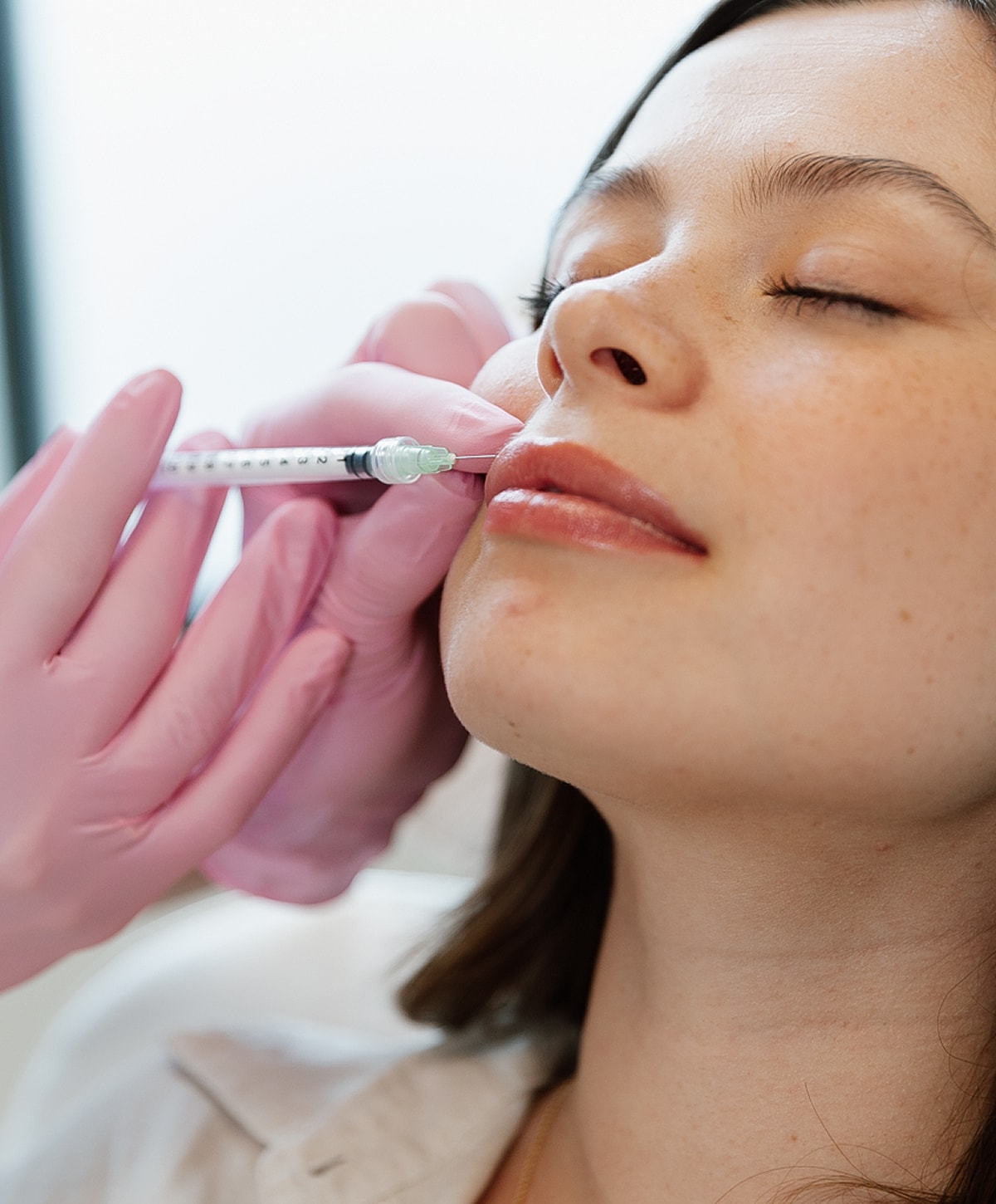
Before treatment, your skin is cleansed, and injection sites may be marked. A fine needle is used for neurotoxin treatment. Topical anesthetic may be applied before dermal fillers to minimize discomfort, and many filler formulas contain lidocaine. Most appointments take less than an hour, depending on the treatment plan.
Mild redness, localized swelling, tenderness, or bruising can occur after injectables and usually improves within a few days. Most patients return to normal activities soon after their appointment. Filler swelling can be more noticeable, particularly in the lips, so allow enough time before a special event.
Follow the instructions for your specific treatment. Your provider may ask you to avoid strenuous exercise for 24 hours, remain upright for several hours after BOTOX injections, and briefly avoid alcohol, hot tubs, or excessive heat. Do not press or massage an area unless instructed. Stay hydrated, protect your skin from excessive sun exposure, and contact the practice with any unexpected symptoms.

BOTOX and Dysport results develop over several days and commonly last three to six months. Follow-up treatment can be scheduled as muscle activity returns. Hyaluronic acid fillers create immediate volume, but the final shape is easier to judge after swelling settles. Most fillers last six to 12 months, with some products lasting longer.
Sculptra results appear over weeks and months as collagen develops. Maintenance varies with product choice, metabolism, dose, treatment area, sun exposure, and individual factors. Your provider will base your schedule on how results develop.
FDA-approved injectables have established safety information, but every medical treatment carries risk. Common short-term effects include bruising, redness, tenderness, and swelling. Neurotoxins may temporarily affect a nearby muscle, while fillers can cause lumps, infection, or asymmetry.
Provider qualifications are crucial. Safe treatment requires detailed knowledge of facial anatomy, sterile technique, careful dosing, authentic products, and access to follow-up care. Report any adverse event or symptom that does not match the recovery instructions you received.

Cost varies depending on the product, dose, treatment area, and number of syringes or sessions. A focused BOTOX treatment will have a different price from facial balancing or a Sculptra series. Your provider will give you a clear estimate after developing your plan.
Wisconsin Institute of Plastic Surgery brings plastic surgery, dermatology, and medical aesthetics together within one practice. This shared expertise gives the team a broad understanding of facial anatomy, skin health, aging, and proportion. Your treatment plan is based on your facial structure and goals rather than a trend or a predetermined amount of product.
Our team values careful listening, clear education, and natural-looking results. Your provider will explain why an injectable is recommended, what it can accomplish, and where its limits are. If medical-grade skincare or another non-surgical treatment would better support your skin, that option can become part of the plan. When surgery is more appropriate, you can receive honest guidance within the same practice.
You don’t need to arrive knowing which product to request. Bring your questions and any information you have about previous treatments, and your provider will help you build a measured, personal plan.
The Green Bay-area office is on Dickinson Road in De Pere, while the Appleton office is on North Lightning Drive near the I-41 and Richmond Street corridor. Contact Wisconsin Institute of Plastic Surgery to schedule your consultation.
No. BOTOX and Dysport are neurotoxins that reduce targeted muscle contractions. Dermal fillers add or restore volume beneath the skin.
Thoughtful dosing and placement should create a more refreshed appearance without erasing your natural beauty. You can begin with a conservative plan and reassess after the result develops.
Yes. They address different causes of facial aging, so many patients benefit from using both. Your provider may combine them during one visit or stage treatment.
JUVÉDERM and Restylane fillers can generally be dissolved with hyaluronidase when medically appropriate. Sculptra is not a hyaluronic acid filler and cannot be dissolved this way.
Allow at least two weeks for many BOTOX and filler treatments so the results can develop and swelling or bruising can resolve. First-time or more extensive treatment may need additional time. Begin Sculptra months ahead because its effect develops gradually.
Injectables can provide wrinkle reduction, volume restoration, and facial contouring, but they cannot remove substantial loose skin or reposition descended tissue. Your provider can explain when surgery may be more effective.